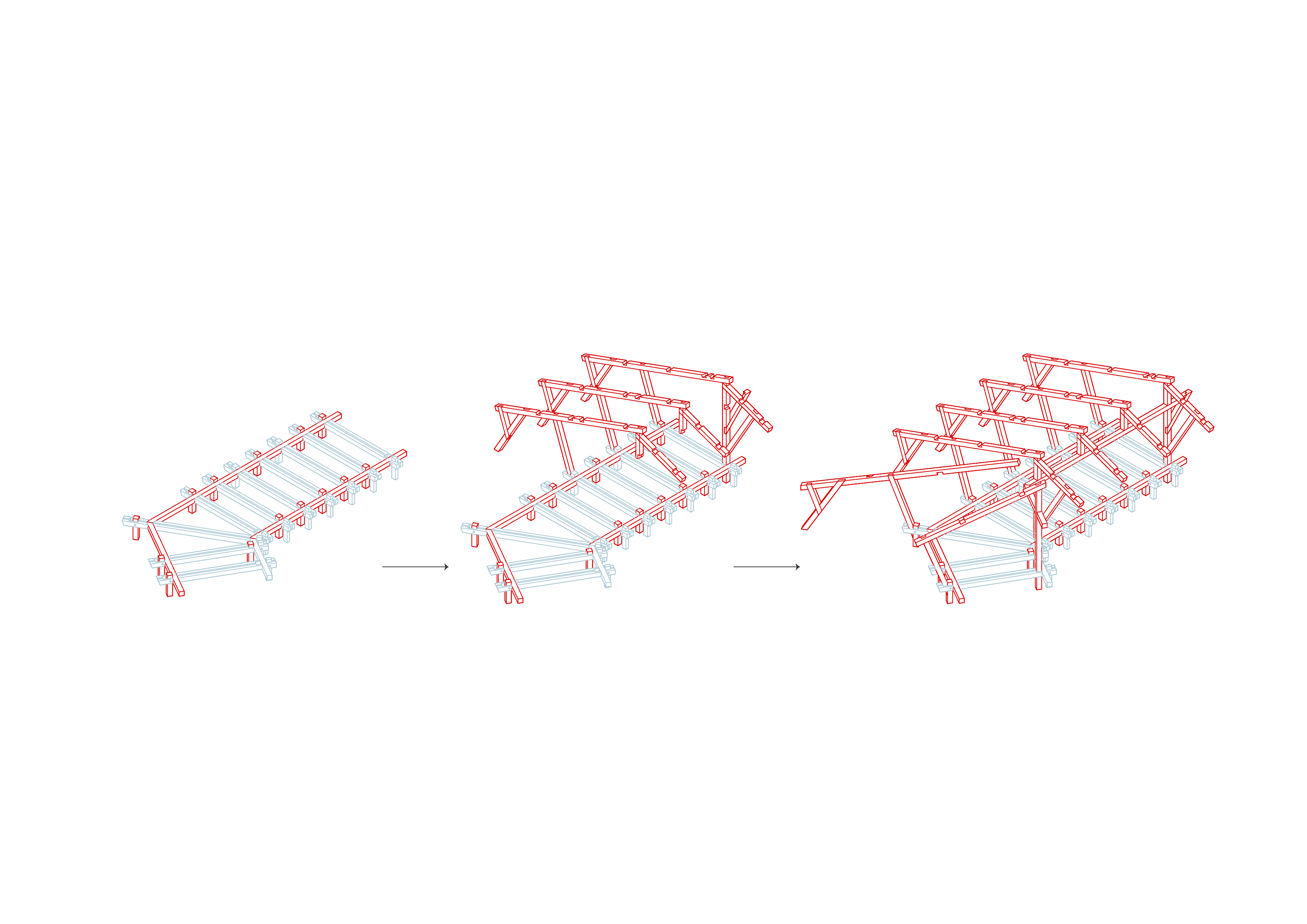
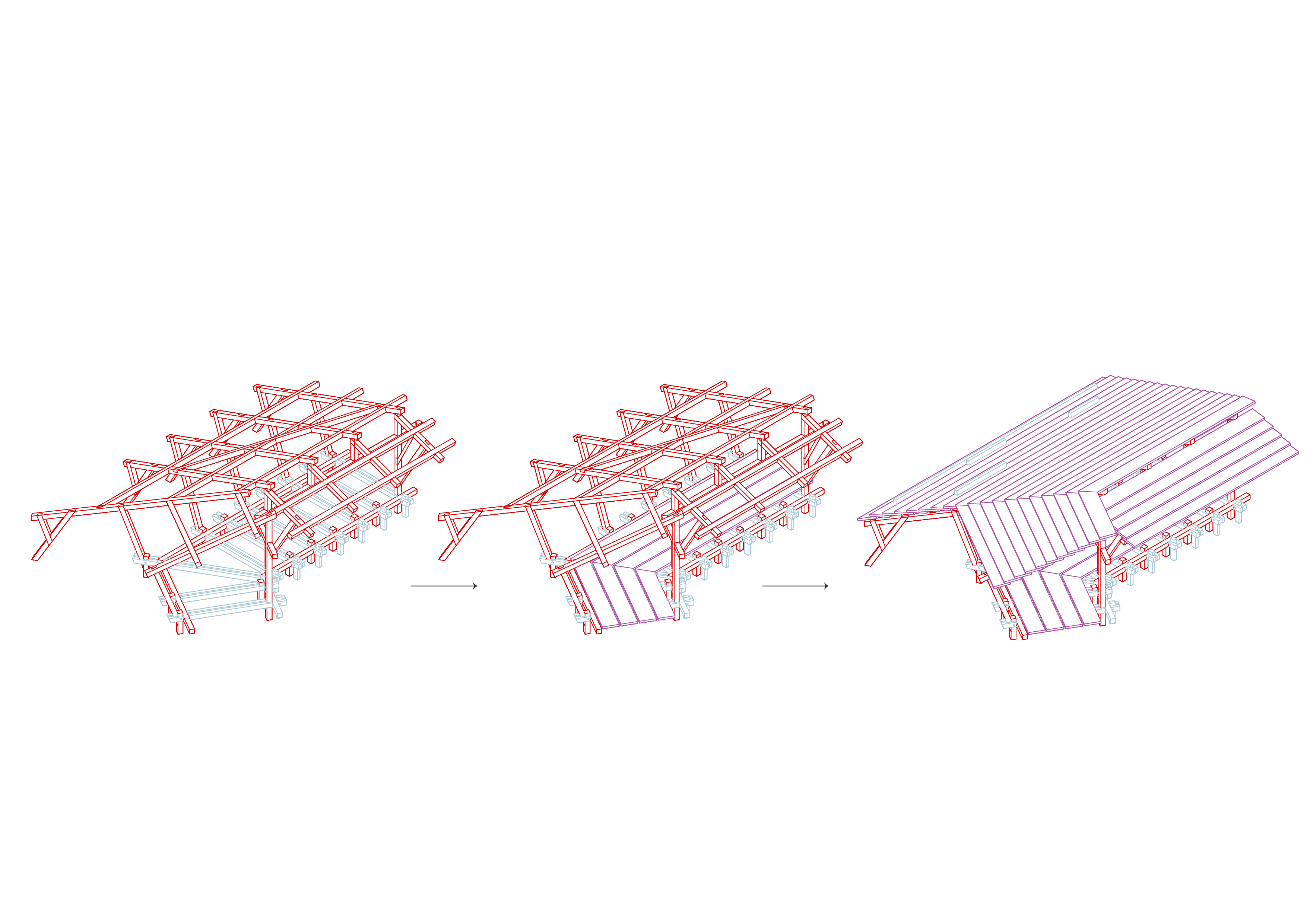
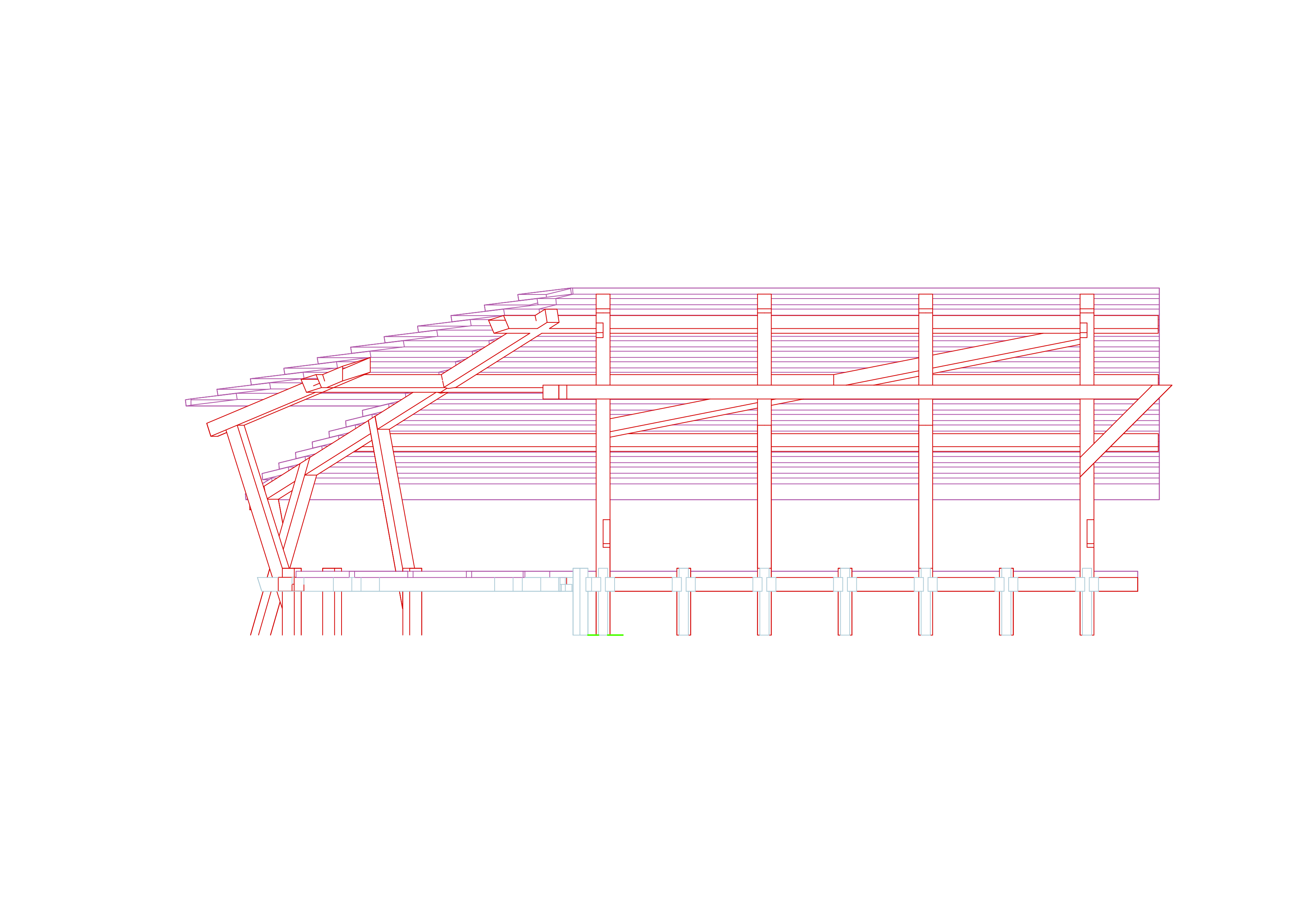
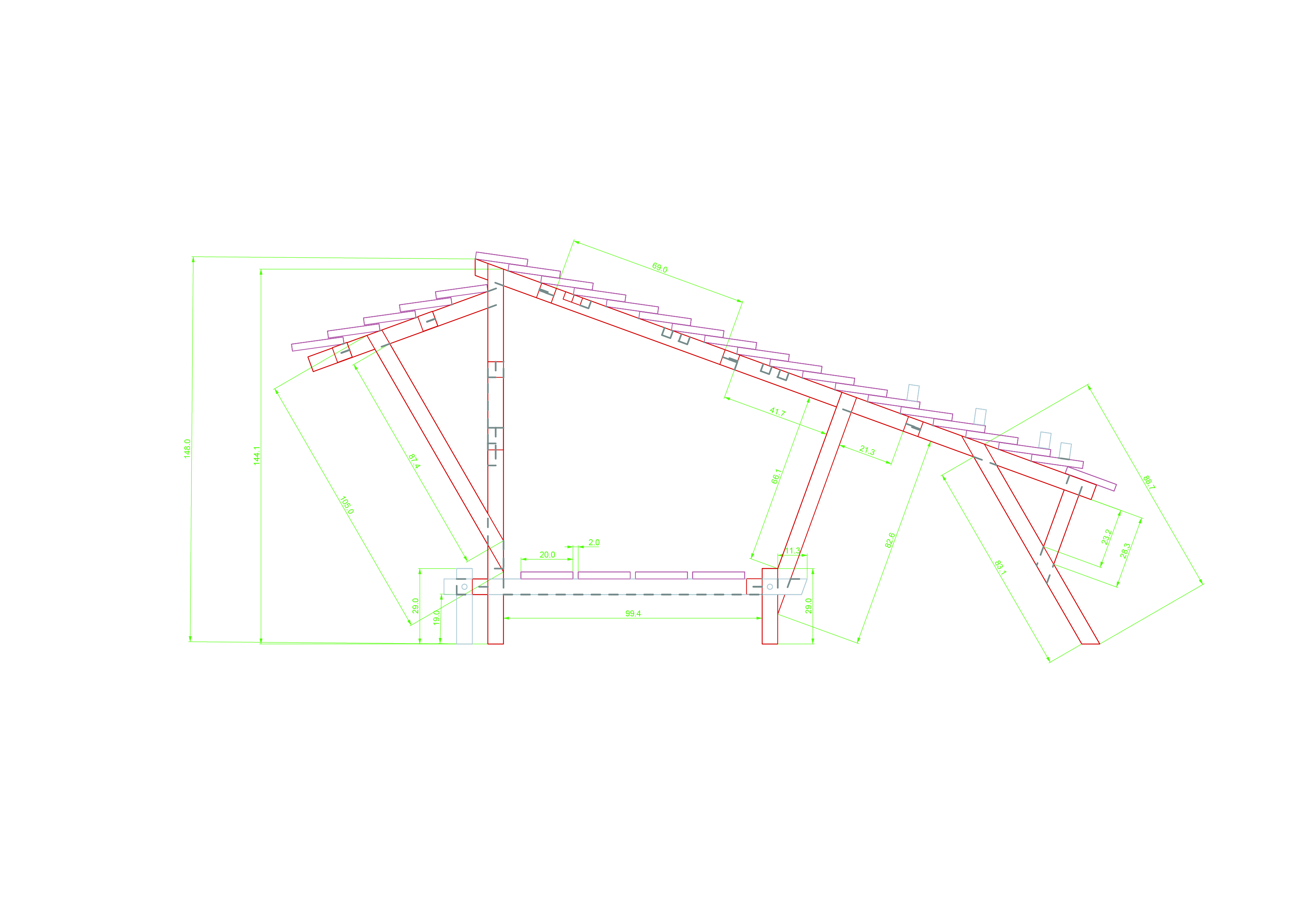
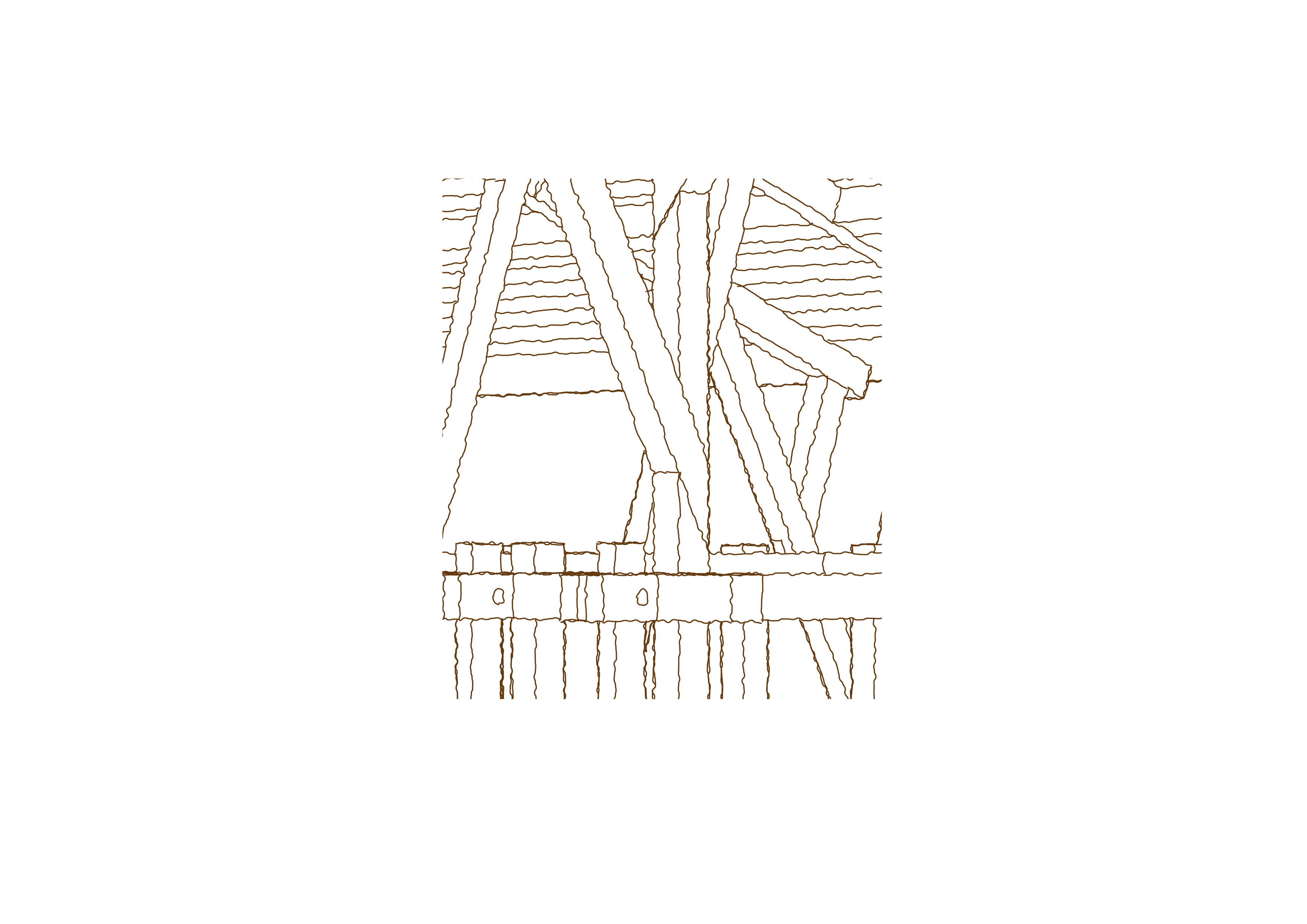
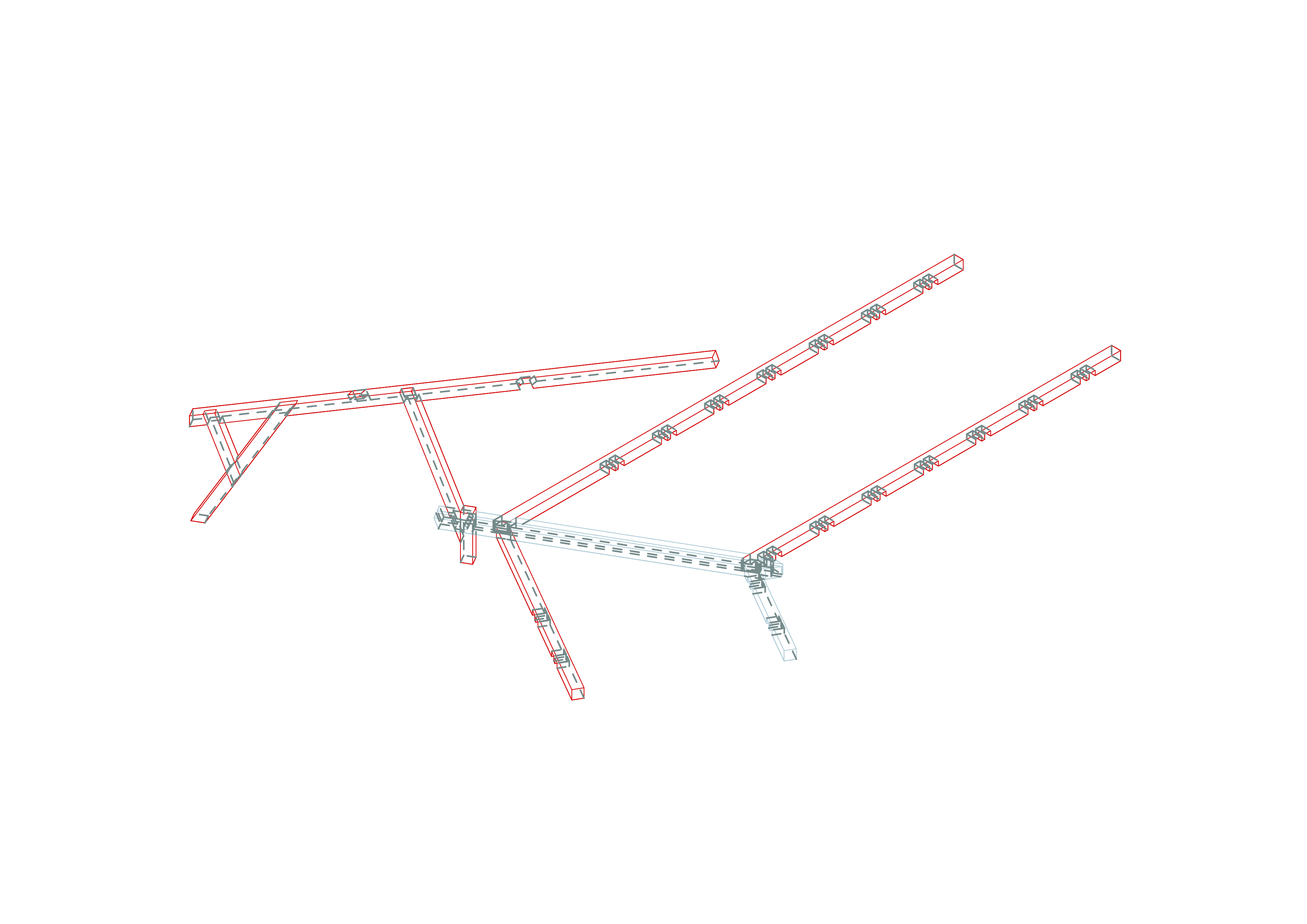
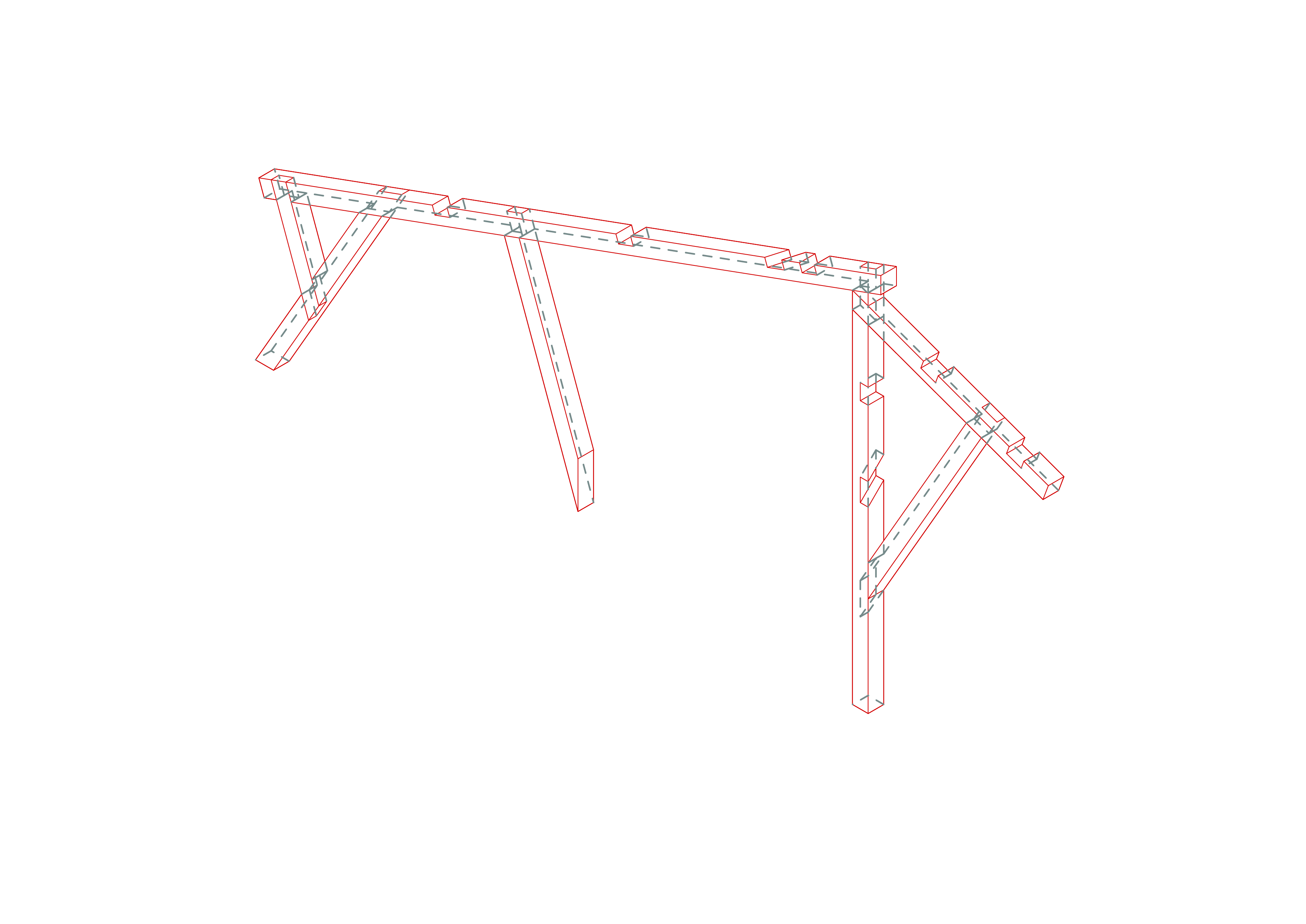
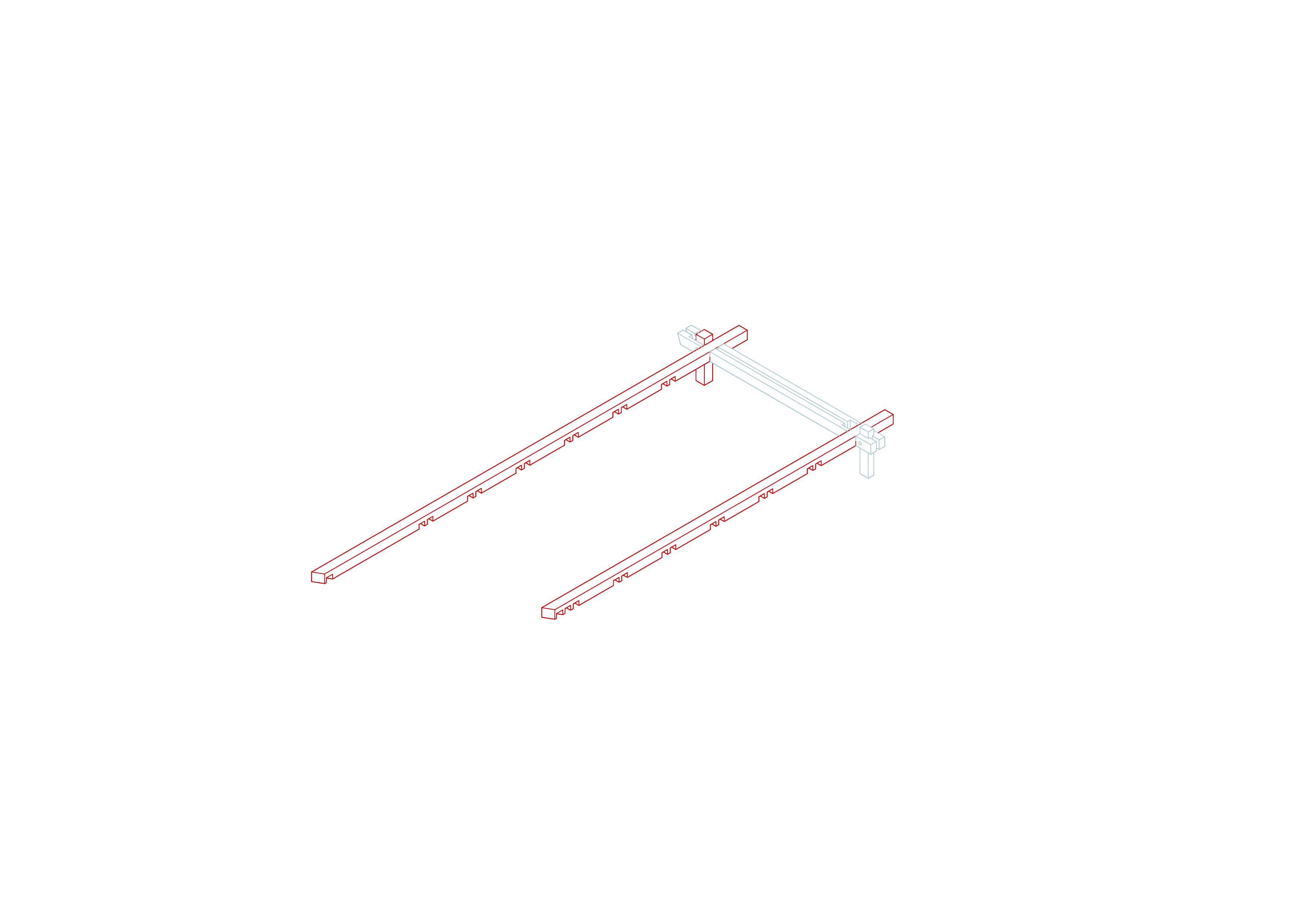
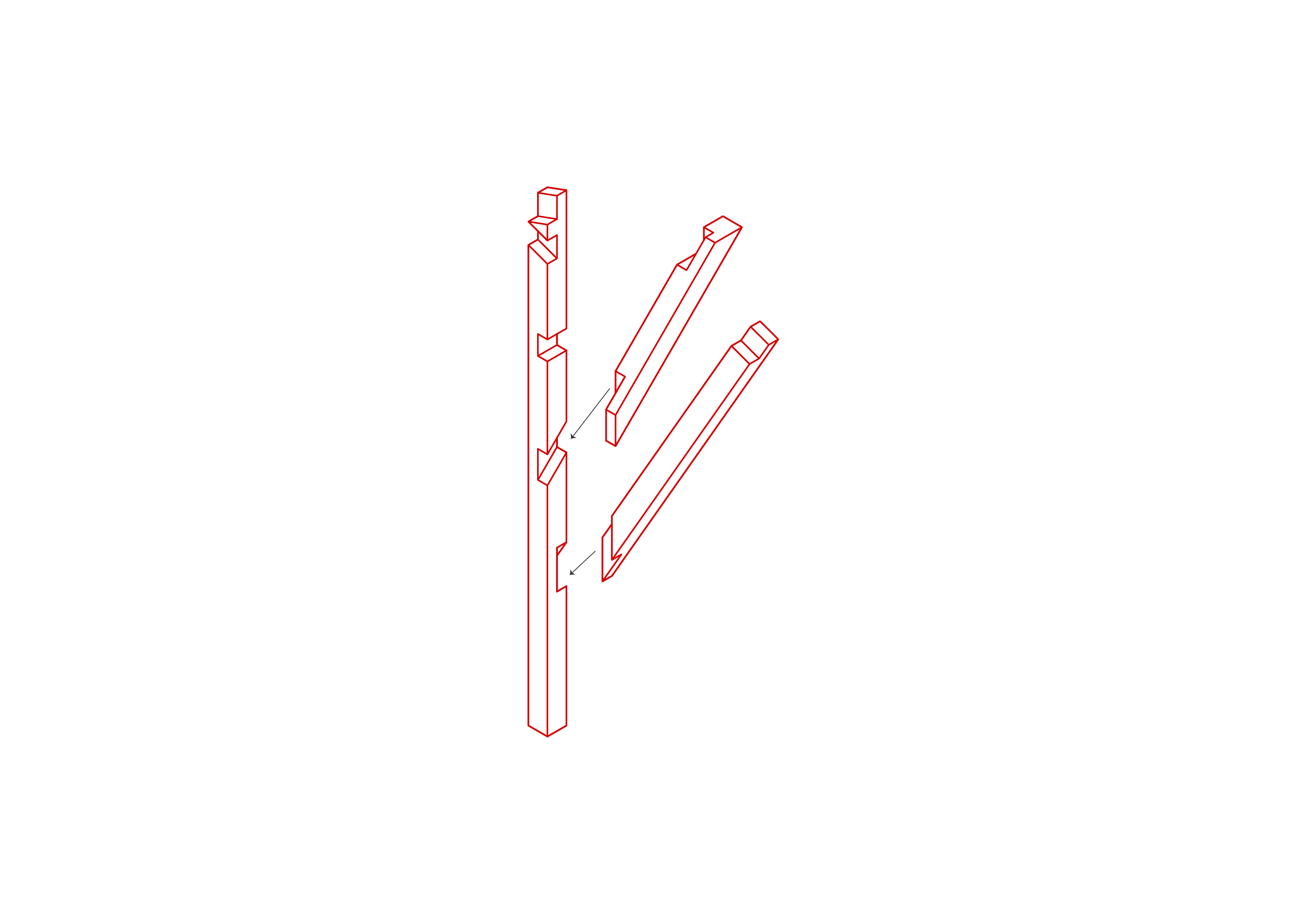
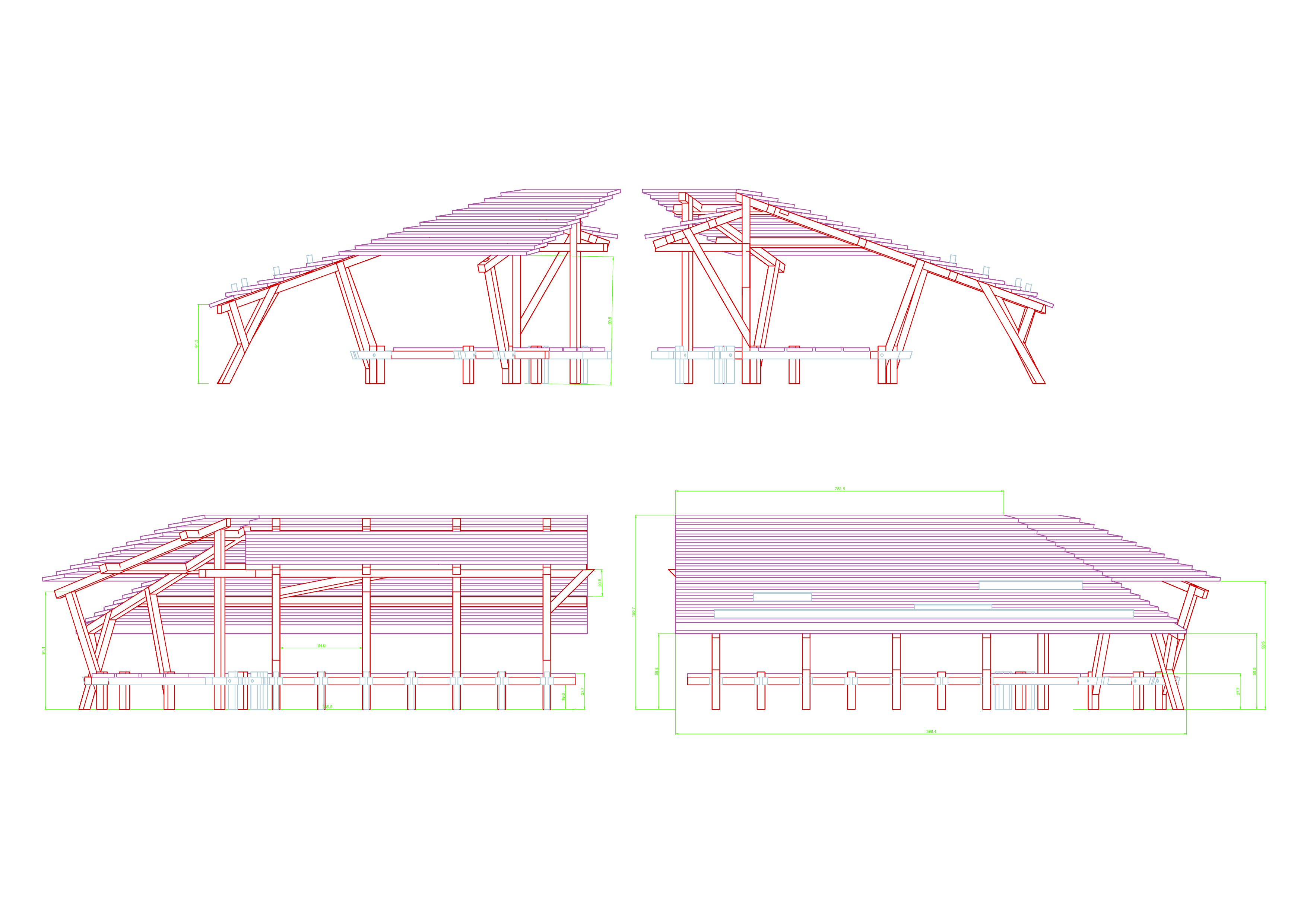
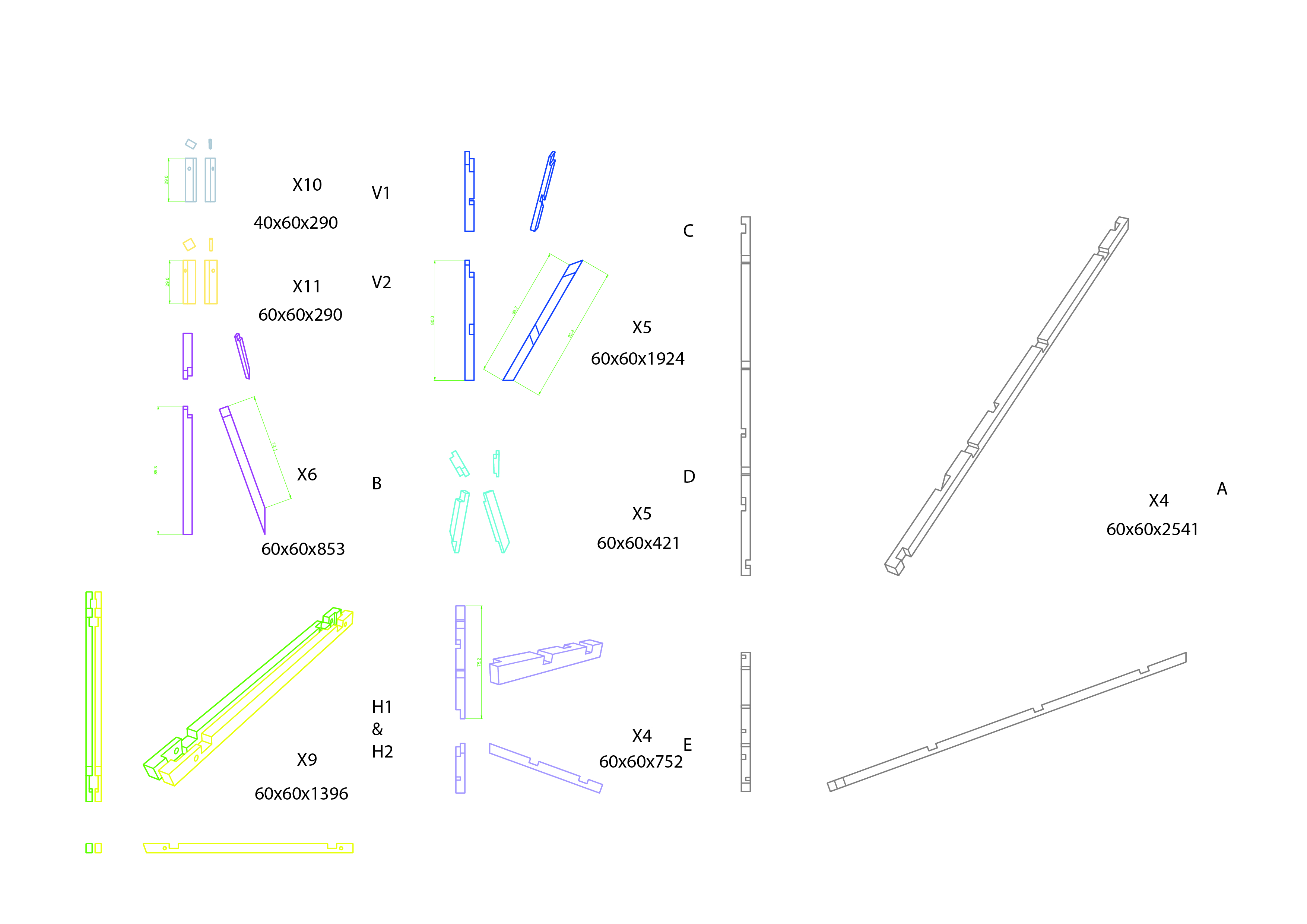
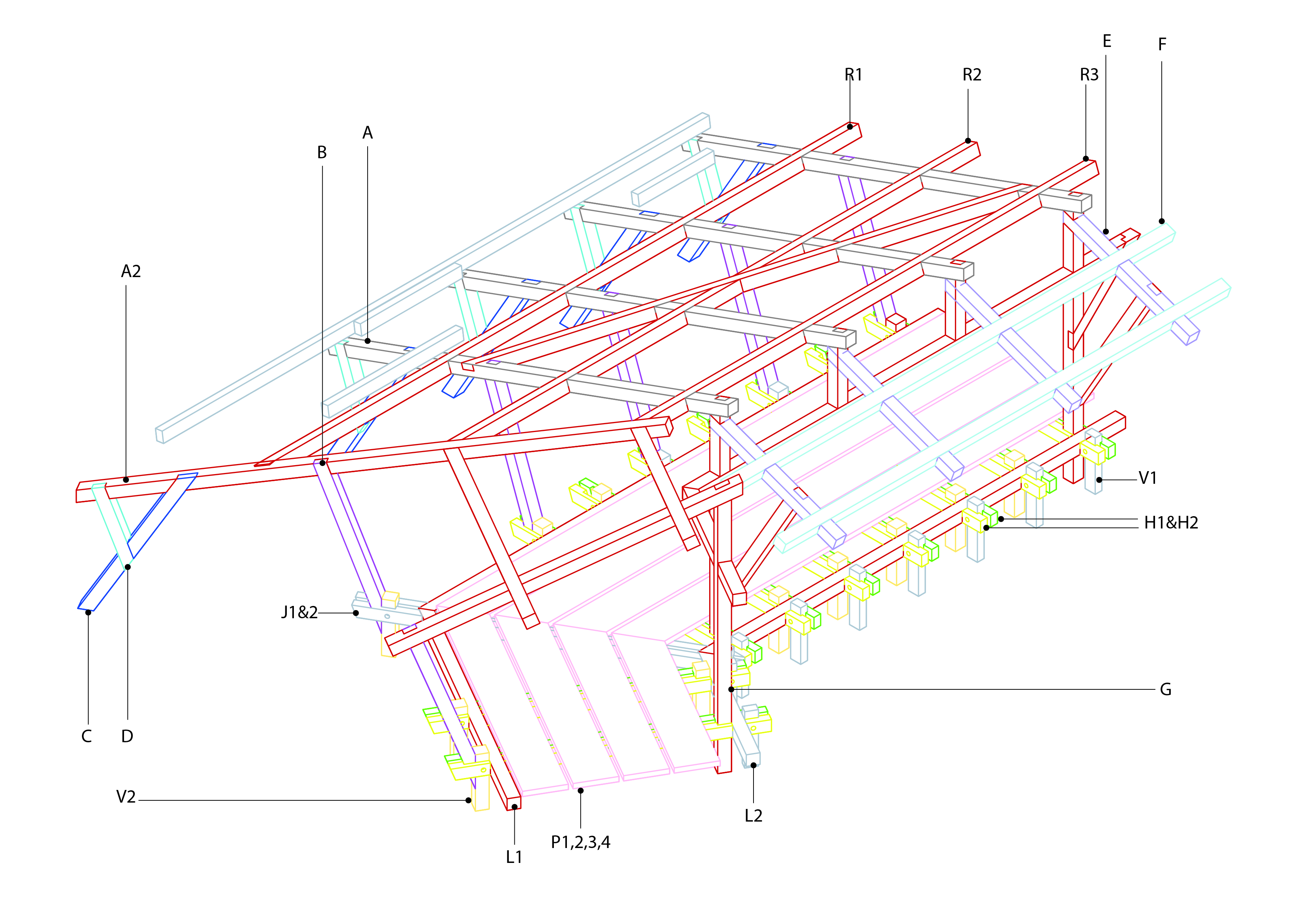
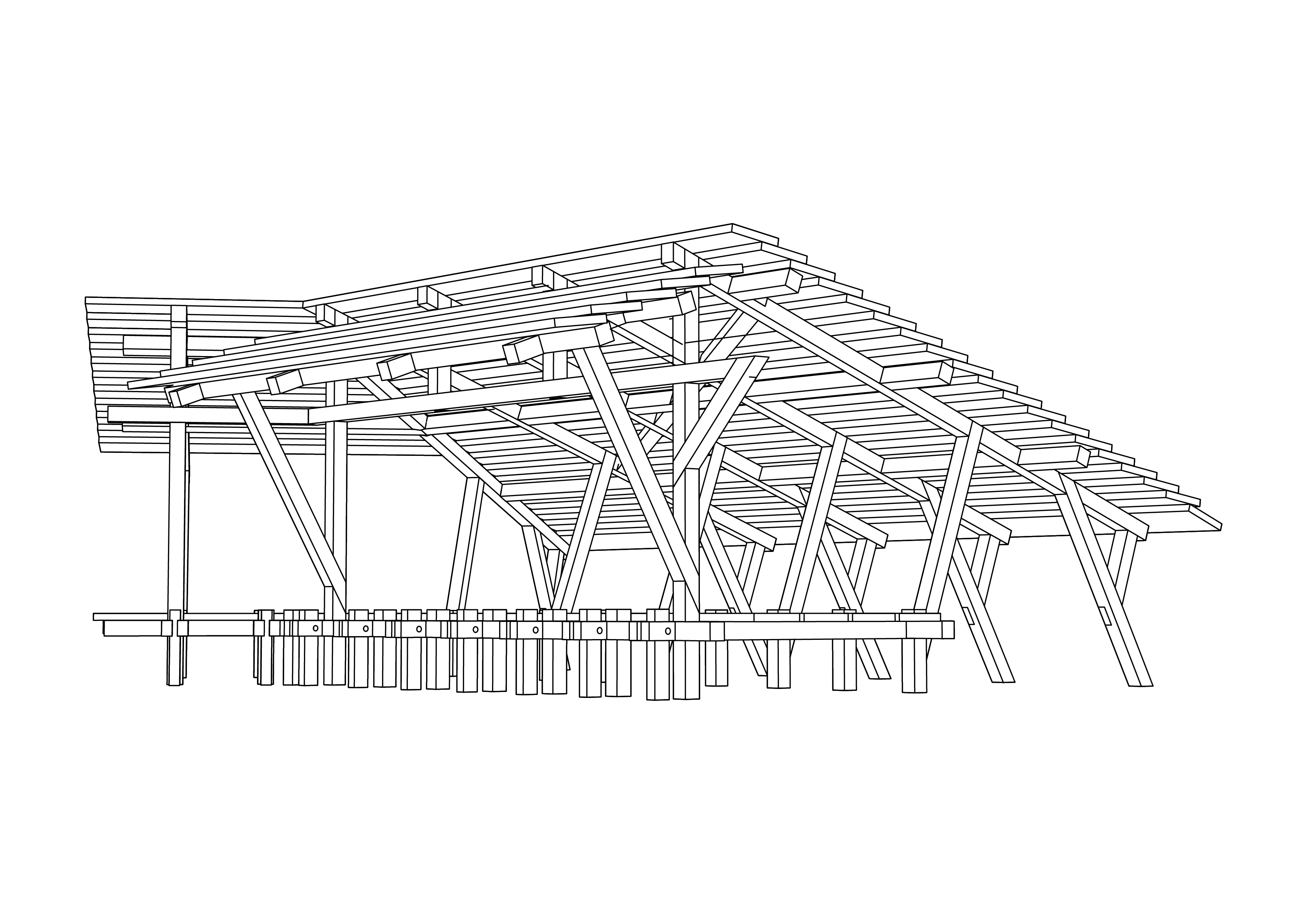
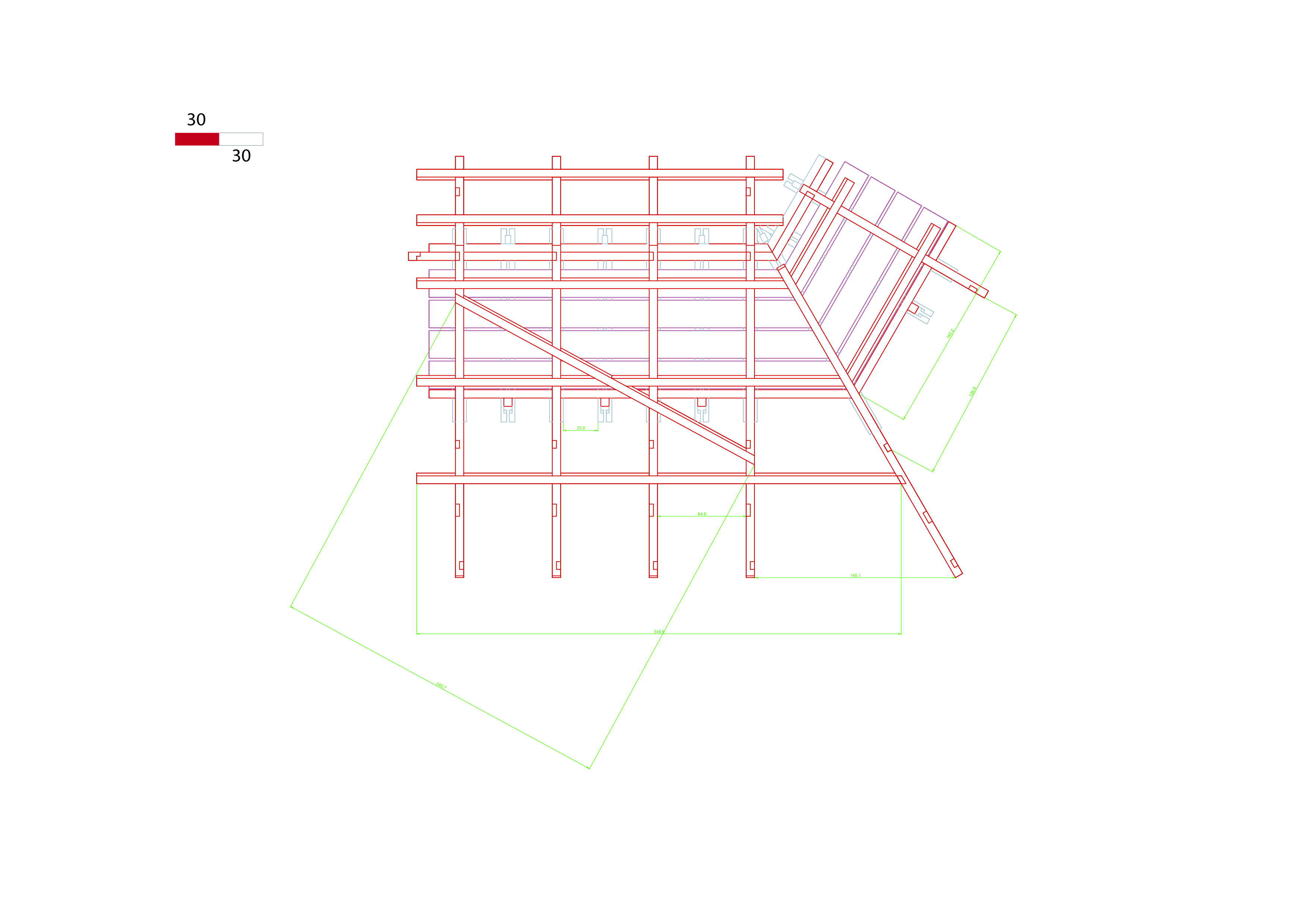
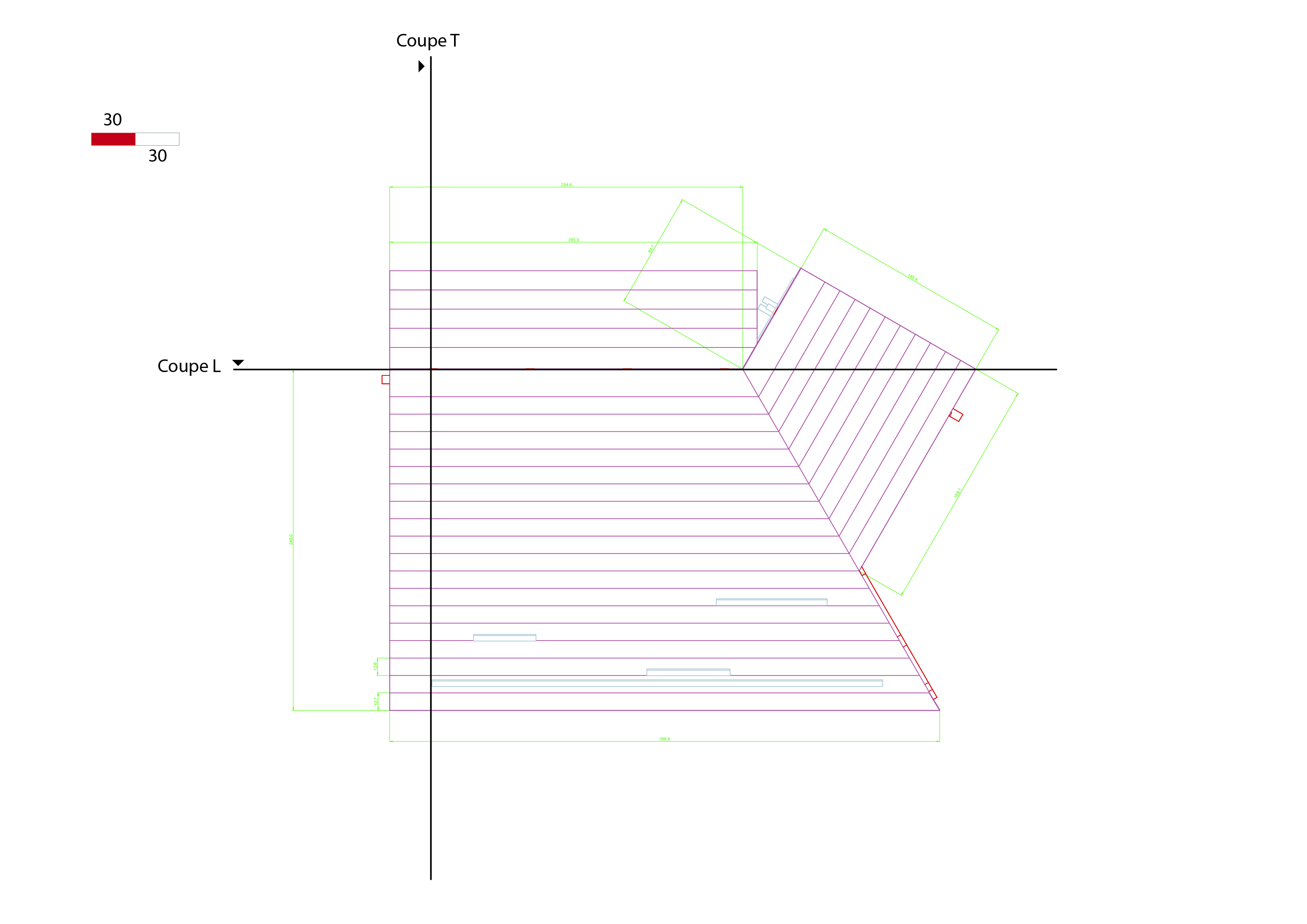
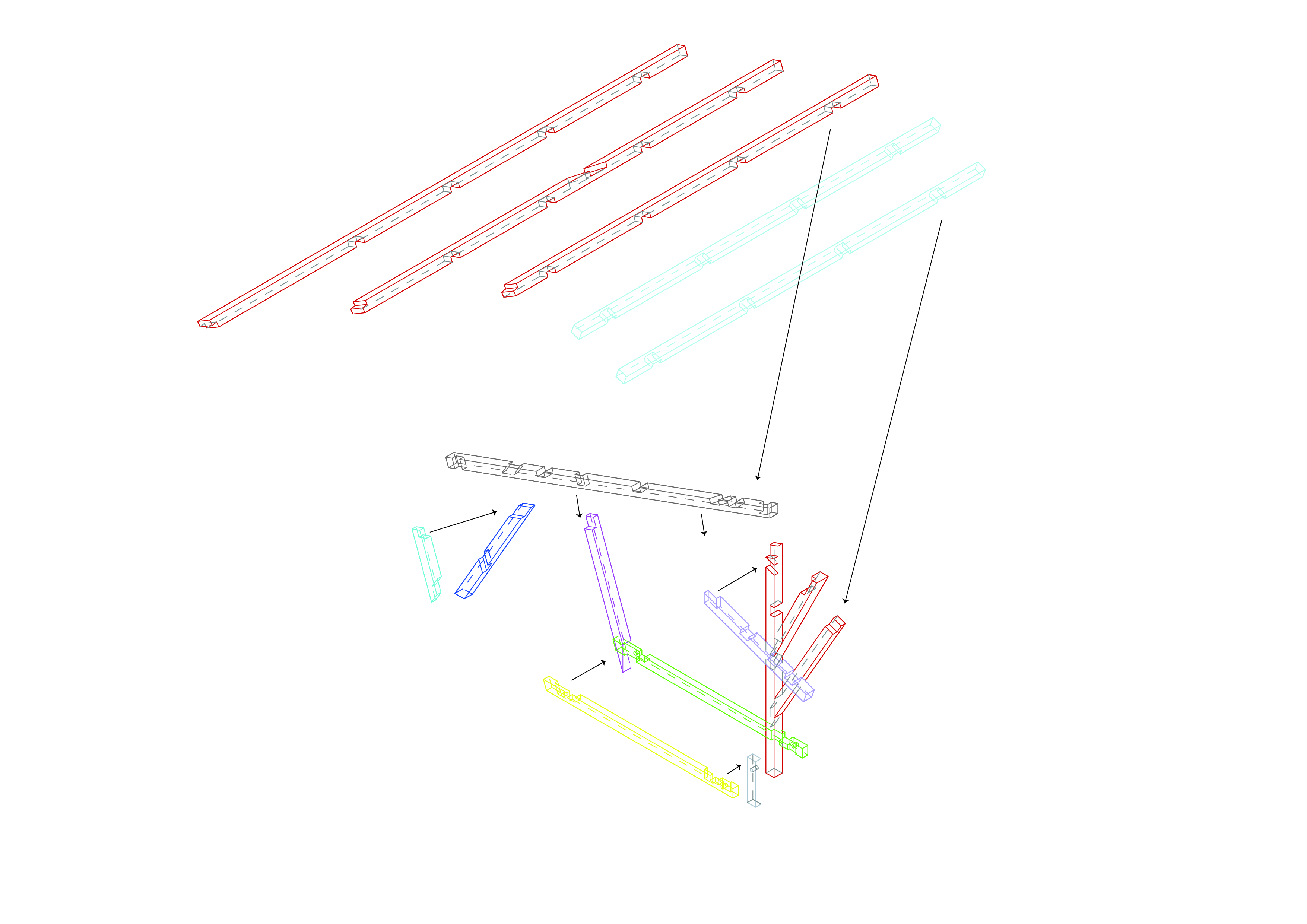
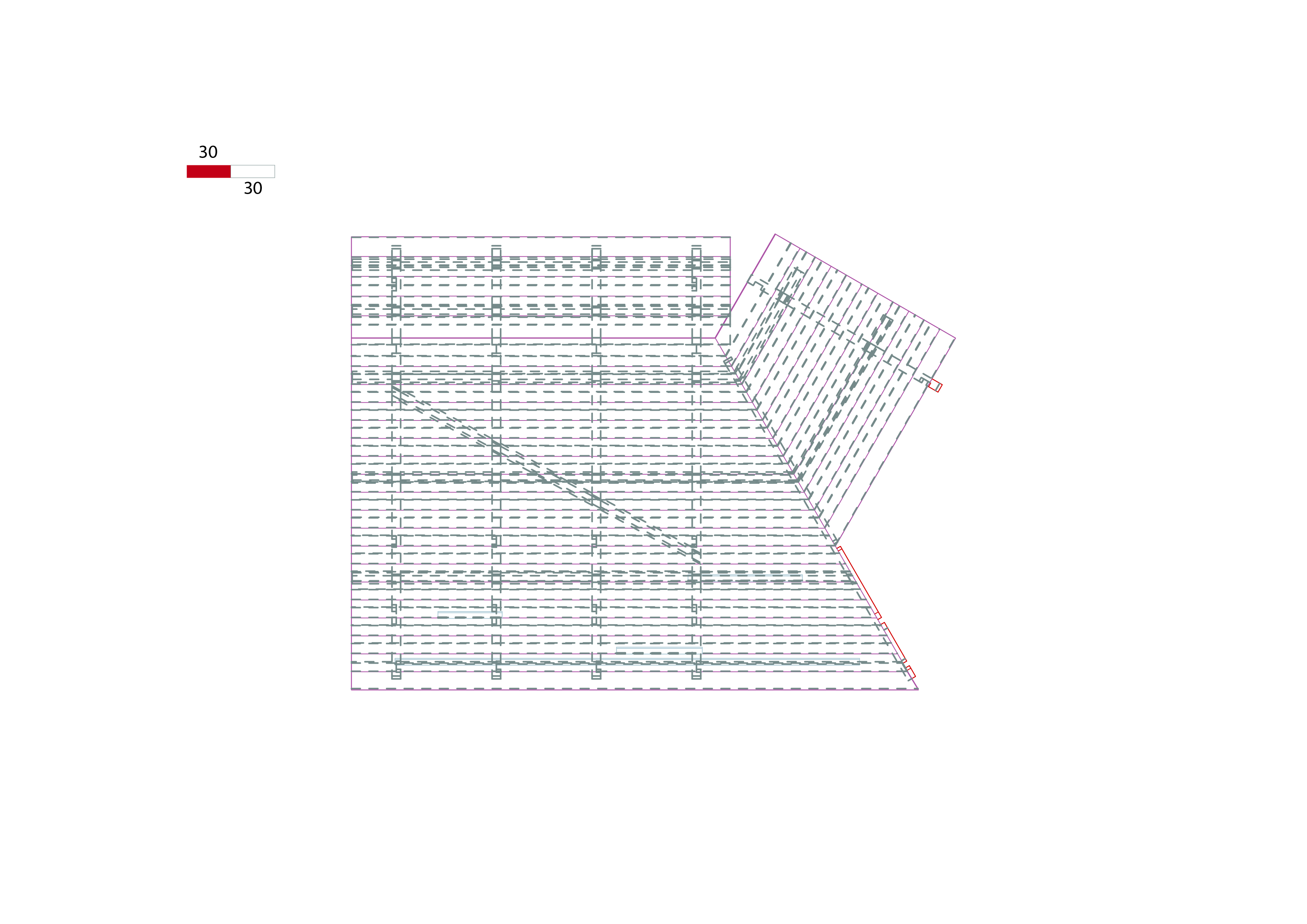
On the edge of a path that borders the agricultural plots, rests a small bivouac hut. Discreet, it blends in with the piles of logs around it, meticulously cut so as not to exceed one meter in width. It recalls the architecture of farm buildings, housing livestock and equipment, as well as the structures of rest areas. It has no walls. Its roof consists of 2 slopes inclined at 20 degrees relative to the ground. One of them is a large surface just a few centimeters from the ground, inviting walkers on the path to venture onto it. Sitting, resting, or observing the surroundings, this large inclined plane shelters a bench in its hollow. A small makeshift bed closest to the ground, it questions the sleep of those who work it. Who protects those who feed us? Do they have time to sit and contemplate their land(s)? Where do they take shelter if even their sleep is not restful? The cabin claims a simple geometry, a humble design in favor of precisely crafted assemblies. It offers a pause in the flow of productivity and usage. It takes sleep out of its pejorative assignment, from this time seen as compressible, to consider it again as an imperative to rehabilitate, a time to decompress. The orientation of the cabin shows that it does not care about the landscape. From the bench: the trees. From the roof: the path. Those who use it must know that they share it. Those who have the luxury of idleness as well. About 1.5 meters high, it is assembled using half-lap joints, sawn wood, and pegs.